San
Rafael Swell showcases unique Utah landscape
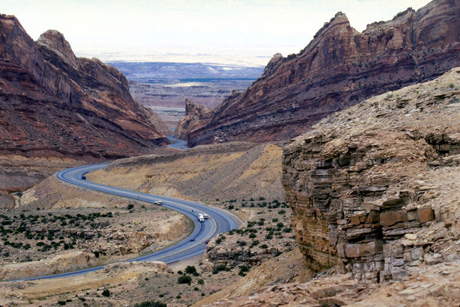
TWISTY:
Interstate 70 bisects the San Rafael Swell. / Photo
by Dennis Adams, National Scenic Byways Online, U.S.
Department of Transportation
By Stephanie Hebert
October 29, 2007 | There is a place where time stands
still. Where the only changes that can be seen year-to-year
are the changes Mother Nature makes to her sculptures.
There are few such places left, but the one I am talking
about is Utah's San Rafael Swell.
The San Rafael Swell is located in Emery County in
south central Utah, just outside of a little town called
Huntington, which is about an hour and a half south
of Salt Lake City. The roads back into the swell are
gravel and at times get washed out by flooding. The
swell is approximately 75 miles long and 40 miles wide.
It consists of slot canyons, washes, mesas, gorges,
and rock formations that touch the sky.
Hikers, mountain bikers, horseback riders, and off
road ATV's are all invited to use the swell. There are
two rivers that cut through the swell. The water is
not potable in either river for people so if you are
planning to spend any time in the swell, plan on carrying
in your own water.
The rock formations are so large they look like they
could take you into heaven itself, but they aren't the
only feature worth seeing. Sunrises and sunsets produce
creamy reds, blues, oranges, and yellows that are the
envy of any artist. They are light shows from the heavens
that start and finish each day. After dark, the stars
come out in their entirety to bedazzle the sky and the
coyotes run across the desert yipping, announcing their
freedom.
Compared to other places in Utah such as Zion National
Park, or Arches, the rock formations are not as architecturally
attractive and the way into see them is not as easy.
You have to be flexible with your route as the roads
do occasionally get washed out. The swell is not a national
park; it is taken care of by the Bureau of Land Management.
The people who use the swell the most are the farmers
who have grazing permits for their cows. But the cows
don't mind sharing.
For those who love to rough it, as there are no amenities
-- once you are back in the swell, remember to bring
your own toilet paper. For those of you who love the
desert, and for those of you who love the quiet, the
San Rafael Swell is a good place to enjoy them. Please
remember the swell is a great place to visit but it
is someone else's home, so respect it by taking everything
out that you bring in.
NW
MS |


